








Las ciencias de la vida se dirigen hacia 2026 con una realidad operativa muy diferente. La innovación científica se está acelerando, pero también lo están haciendo los puntos de presión: una escasez de mano de obra a nivel mundial, el agotamiento persistente de los médicos, vías de atención más complejas y expectativas crecientes en cuanto a las experiencias digitales.
Para los especialistas en marketing de las ciencias de la vida, esto plantea un desafío: ¿cómo pueden involucrar a los profesionales de la salud (HCP) y a otros profesionales clave de las ciencias de la vida dados los problemas a los que se enfrentan? ¿Y cómo pueden capacitar a sus equipos de campo y representantes ante tales cambios?
Basándonos en el trabajo de ON24 con marcas líderes en el sector farmacéutico, biotecnológico y médico, nuestros puntos de referencia en ciencias de la vida y una serie de investigaciones externas, aquí hay cuatro tendencias que vemos dando forma a la participación en ciencias de la vida en 2026.
Asegúrate de tenerlas en cuenta en tu estrategia de marketing.
1. La educación impulsada por la IA pasa de ser una práctica piloto a convertirse en práctica estándar
Los avances en medicina han transformado la atención sanitaria en todo el mundo. Sin embargo, simplemente no hay suficientes profesionales capacitados para brindar a los pacientes la atención que necesitan. La Organización Mundial de la Salud estima que el mundo enfrentará una falta de aproximadamente 11,1 millones de trabajadores de la salud para 2030. A medida que la demanda de atención médica supera la oferta, las encuestas nacionales coordinadas por la Asociación Médica Americana y otros continúan encontrando que alrededor de la mitad de los médicos informan al menos un síntoma de agotamiento, incluso después de las mejoras desde el pico de la pandemia.

Aun así, los HCP acreditados necesitan mantenerse al día con la investigación y los desarrollos, tanto para mantener su estatus profesional como para brindar la atención de la más alta calidad a los pacientes. Los canales en línea se han convertido en una forma preferida para ellos de hacerlo, lo que les permite equilibrar sus responsabilidades diarias con el aprendizaje continuo.
En este contexto, la educación y el compromiso en el ámbito de la salud se están convirtiendo en una palanca estratégica. Según las cifras publicadas por Grand View Research, el valor de la El mercado global de educación en atención médica alcanzó los 124.7100000000 $ en 2024 y se proyecta que alcance $387.40 mil millones para 2033, impulsado por el aprendizaje electrónico, la IA y las tecnologías inmersivas, con una Tasa de Crecimiento Anual Esperada del 13,5% de 2025 a 2033.
Para los equipos de asuntos médicos, comerciales y digitales, la pregunta ya no es si deben invertir en educación y participación digitales. La cuestión es cómo construir un ecosistema conectado y rico en datos que apoye a los profesionales sanitarios, los pacientes y los equipos internos a lo largo de todo el ciclo de vida del producto. Aquí es donde la educación impulsada por la IA puede ayudar.
La IA generativa está pasando rápidamente de ser un proyecto experimental a convertirse en una capacidad integrada en la atención sanitaria y la educación médica. El Iniciativa ChangeMedEd de la AMA y su «aprendiz adaptativo maestro» El marco subraya la importancia de ayudar a los médicos a convertirse en aprendices autodirigidos y adaptables que puedan mantenerse al día con la evidencia y las tecnologías en constante evolución.
Para las empresas de ciencias de la vida, 2026 será menos sobre experimentar con herramientas de IA independientes y más sobre usar la IA para:
- Personalice el contenido basado en datos de interacción de primera mano de los profesionales de la salud y otros públicos
- Generar y adaptar recursos educativos (por ejemplo, resúmenes de puntos clave, videoclips cortos, controles de conocimientos) a partir de contenido aprobado y conforme
- Proporcionar caminos de aprendizaje adaptativos que respondan a la especialidad de un HCP, su comportamiento previo y las lagunas de conocimiento
En cuanto a la tecnología, la plataforma de ON24 ya utiliza datos de interacción de primera parte para impulsar recomendaciones de contenido impulsadas por IA y clips generados automáticamente en función de dónde es mayor el compromiso. Como se muestra en el Informe de 2025 sobre los estándares de compromiso digital en las ciencias de la vida, los clientes de las ciencias de la vida generaron seis veces más contenido derivado con IA en 2024 que en 2023 a partir de sus seminarios web y eventos virtuales en la plataforma ON24.
Cómo los especialistas en marketing de las ciencias de la vida pueden responder a esta tendencia
- Trate la IA como un acelerador, no como un reemplazo de la experiencia humana
La IA puede transformar presentaciones de diapositivas largas y aprobadas en experiencias digitales adaptativas. Los expertos médicos y legales aún necesitan definir la narrativa, las barandillas y las afirmaciones científicas, asegurando que cualquier contenido sea adecuado para su publicación. Es esencial contar con un humano en el proceso. - Ancle la IA en datos confiables y de primera parte
Los datos de compromiso capturados en seminarios web, simposios virtuales y centros de contenido deberían alimentar los modelos y reglas de IA, de modo que las recomendaciones estén impulsadas por lo que los HCP realmente hacen, no por suposiciones genéricas. - Personalice las recomendaciones y diseñe para viajes adaptativos, no para eventos únicos
Use la IA para recomendar la siguiente pieza de contenido, el módulo de microaprendizaje adecuado o el evento de seguimiento más relevante en función del viaje de cada HCP hasta el momento.
Para obtener más información, lea nuestro artículo sobre cómo los especialistas en marketing de ciencias biológicas pueden personalizar experiencias con datos o descargue nuestro e-book sobre Cómo maximizar los resultados en todo el ciclo de vida de la campaña con IA.
2. Los centros permanentes y el microaprendizaje remodelan la forma en que los profesionales sanitarios se mantienen actualizados
Los médicos están más ocupados que nunca. La escasez de personal, la creciente complejidad de los pacientes y el aumento del trabajo administrativo hacen que las reuniones presenciales tradicionales de un día completo sean cada vez más difíciles de asistir.
A Revisión de alcance de 2023 de la educación médica continua virtual (VCME), que abarca 282 estudios, encontró que la ECM virtual ha crecido rápidamente desde 2005 y se aceleró notablemente durante la pandemia de COVID‑19. La revisión concluyó que la ECMV puede mejorar el acceso y la flexibilidad y es generalmente efectiva para mejorar el conocimiento y la práctica clínica, pero también plantea importantes desafíos en materia de equidad y diseño.

Pero el crecimiento de la ECMV no significa que todas las experiencias educativas deban ser sesiones largas. De hecho, las pruebas de los programas de educación continua sugieren que las actividades en línea cortas y modulares suelen estar asociadas con una alta aceptación y finalización entre los profesionales sanitarios, especialmente cuando están disponibles bajo demanda e integradas en los flujos de trabajo clínicos.
Para los profesionales de marketing de las ciencias de la vida y los equipos médicos, esto sugiere que las estrategias pueden beneficiarse al alejarse de los eventos únicos y orientarse hacia:
- Centros educativos siempre activos que combinan seminarios web en vivo, simposios virtuales y bibliotecas de contenido a pedido.
- Módulos cortos y enfocados que ofrecen un único objetivo de aprendizaje en minutos, no en horas.
- Formatos basados en simulaciones y escenarios que mejoran las habilidades y la toma de decisiones, respaldados por pruebas sólidas de la simulación en la formación quirúrgica y procedimental.
Cómo los especialistas en marketing de las ciencias de la vida pueden responder a esta tendencia
- Cambiar de calendarios de eventos a programas de contenido
Asigne su estrategia de área terapéutica a un centro de contenido durante todo el año que mezcle formatos en vivo y bajo demanda para profesionales sanitarios, equipos internos y distribuidores. - Diseñar para diferentes profundidades de compromiso
Combine actualizaciones cortas y fáciles de consumir, como videoclips de Momentos clave, con sesiones más profundas basadas en casos y CME con certificado para satisfacer diferentes necesidades y limitaciones de tiempo. - Utilice análisis para refinar la combinación
Los datos de interacción de primera mano de los webinarios, eventos virtuales y centros de contenido de ON24 pueden revelar qué longitudes, formatos y temas generan la mayor tasa de finalización, preguntas y acciones de seguimiento. Utilice esta información para optimizar los programas actuales y planificar contenidos futuros, al mismo tiempo que proporciona a los representantes información sobre cómo han interactuado exactamente los profesionales sanitarios, distribuidores y responsables de la toma de decisiones.
3. Los sistemas conectados convierten los datos de primera mano en información en tiempo real
A medida que la atención sanitaria se vuelve más conectada, la cantidad de datos generados, desde los registros de salud electrónicos hasta los dispositivos médicos y las herramientas digitales, sigue aumentando. Notas de Deloitte que el El futuro de la salud dependerá de datos interoperables que puedan moverse libremente entre sistemas, respaldado por plataformas abiertas y tecnologías emergentes que se integran en las operaciones cotidianas.
Un reciente Análisis del Financial Times estima que el global mercado del «hospital inteligente» — que abarca la IA, el IoT, la robótica y las plataformas conectadas — alcanzará aproximadamente a $148 mil millones para 2029 a medida que los hospitales invierten para mejorar la eficiencia y los resultados para los pacientes. Aunque la oportunidad es enorme, los líderes de hospitales y empresas de tecnología médica mencionan constantemente los desafíos de la integración con los EHR, la protección de los datos de los pacientes y la adaptación de la tecnología a los flujos de trabajo clínicos existentes.

Para los especialistas en marketing de las ciencias de la vida, esto tiene dos implicaciones:
- Los datos de interacción de primera parte se volverán más valiosos
La creación y recopilación de datos dentro de los entornos de atención médica se complementan perfectamente con los datos de interacción a los que los especialistas en marketing de las ciencias de la vida pueden acceder a través de actividades en línea. A medida que los profesionales sanitarios, los pacientes y los equipos de campo interactúan con seminarios web, congresos virtuales y centros de contenido, generan datos de comportamiento ricos: preguntas realizadas, encuestas respondidas, recursos descargados, tiempo dedicado a sesiones específicas y más. - Esos datos deben fluir hacia los flujos de trabajo de comercialización más amplios
Las perspectivas de interacción son más potentes cuando se integran con sistemas CRM (por ejemplo, Veeva o Salesforce) y herramientas de campo, y cuando informan la orquestación omnicanal. Dichos datos pueden ser particularmente útiles cuando se combinan con datos sobre el uso de tratamientos, el historial de prescripción y las necesidades de los pacientes. Por ejemplo, un aumento en la interacción con contenido que se alinea con los datos epidemiológicos de una región en particular podría utilizarse para reasignar la actividad de marketing y los representantes de campo a ese territorio.
Los clientes de ciencias de la vida de ON24 ya están transmitiendo datos de interacción a sus plataformas de CRM y automatización de marketing para identificar las mejores acciones siguientes, guiar el seguimiento de la fuerza de ventas y enriquecer la planificación de cuentas y territorios. Este enfoque se destaca en el trabajo de ON24 con empresas como UCB, que utiliza los datos de ON24 integrados con Salesforce y Veeva para respaldar una estrategia de interacción omnicanal madura.
En el futuro, es probable que las empresas de ciencias de la vida den pasos adicionales para transmitir información y tareas recomendadas a los representantes, lo que les permitirá mantener conversaciones de mayor calidad. Esta tendencia fue destacada por la consultora farmacéutica Impatient en el informe Death to Digital: El nacimiento de nuevos roles en el sector farmacéutico, con la aparición de representantes comerciales impulsados por datos denominados «Agentes de Compromiso».
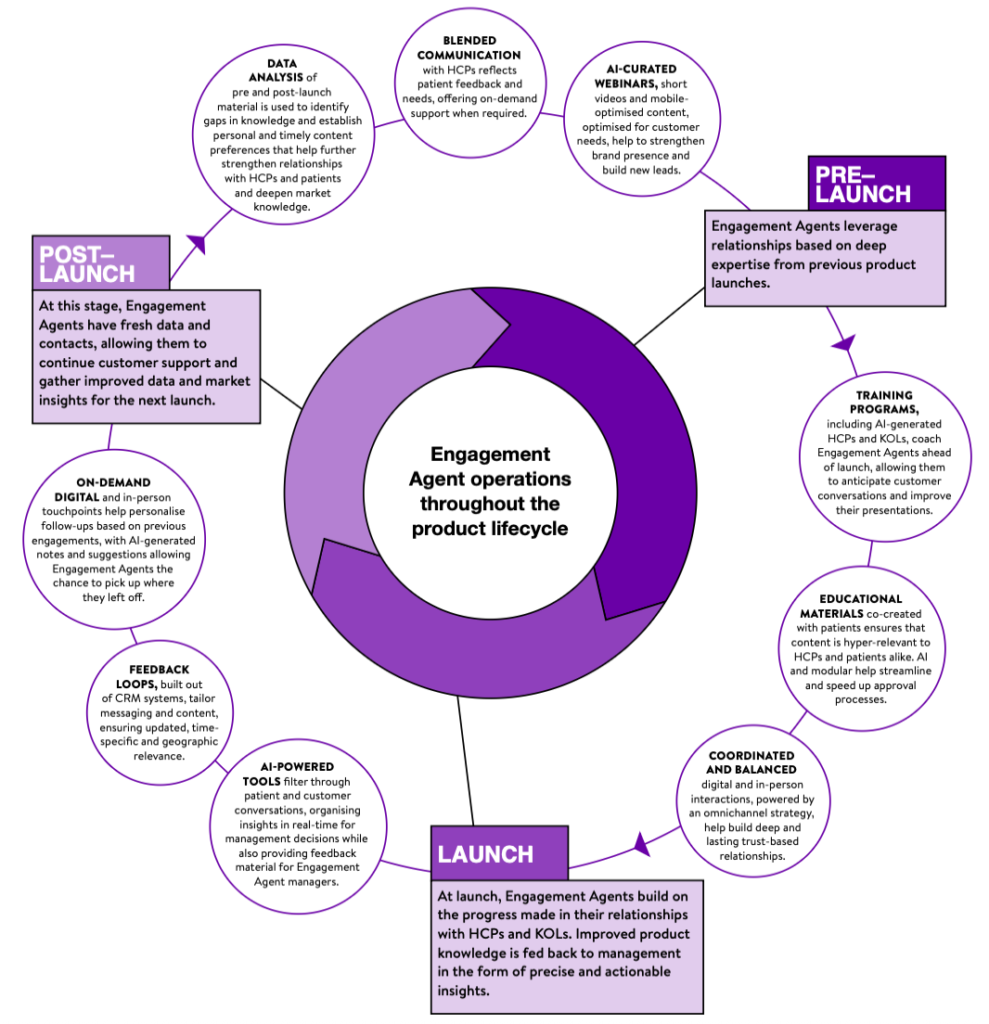
Fuente: Informe de Impatient Health
Cómo los especialistas en marketing de las ciencias de la vida pueden responder a esta tendencia
- Priorice las plataformas interoperables
Al evaluar la tecnología de compromiso, busque integraciones nativas y API. como los ofrecidos por ON24. Esto permitirá que los datos de interacción directa fluyan hacia el CRM, los almacenes de datos y las herramientas de campo. - Definir modelos de datos para la promoción en torno a cuestiones clínicas
Trabajar con los equipos médicos, comerciales y de análisis para definir qué señales son importantes (por ejemplo, cuestiones relacionadas con las directrices, el interés en subtipos específicos de pacientes, la visualización repetida de un activo sobre el mecanismo de acción) y cómo se relacionan con las acciones de marketing y la actividad de campo. - Utilizar la IA y el análisis de forma responsable y proactiva
A medida que los datos se vuelven más detallados, la gobernanza y la transparencia se vuelven fundamentales. Colaborar con los equipos de cumplimiento, privacidad y legales para garantizar que el uso de los datos y las recomendaciones impulsadas por la IA cumplan con las normativas locales y las políticas de la empresa. Pregunte a sus proveedores de tecnología actuales y potenciales cómo cumplen con dichas normas.
4. Los resultados, la eficiencia y la automatización redefinen las medidas de éxito
Con los presupuestos bajo presión y el escrutinio en el gasto promocional y médico, las organizaciones de ciencias de la vida deben demostrar cada vez más cómo la interacción está impulsando resultados significativos. Este tema ha sido discutido anteriormente por los especialistas en marketing de ciencias de la vida en un seminario web ON24 anterior.
Afortunadamente, la base de evidencia para la educación médica continua (CME) es sustancial. Una síntesis de revisiones sistemáticas publicada en la Revista de Educación Continua en las Profesiones de la Salud concluyó que la ECM interactiva tiene más probabilidades de mejorar el rendimiento del médico y, en muchos casos, los resultados de salud del paciente, especialmente cuando los programas son interactivos, utilizan múltiples exposiciones y se centran en el cambio de la práctica en el mundo real. Los beneficios de la CME pueden, por lo tanto, actuar como un poderoso incentivo para fomentar no solo la asistencia en eventos en línea, sino también para diseñar experiencias interactivas que involucren la participación, incluso si dicha participación es asincrónica.
También proporciona una razón para invertir en plataformas y herramientas adecuadas: cuando la educación y la tecnología están bien diseñadas, ambas pueden mejorar el rendimiento clínico y liberar tiempo para el cuidado del paciente.

Pero, ¿qué pasa con aquellos que trabajan en empresas de ciencias de la vida? Para aquellos que trabajan en investigación, desarrollos como AlphaFold de Google DeepMind proporcionan ejemplos poderosos del potencial de la IA. Aun así, el análisis de McKinsey muestra que la implementación de IA generativa dentro de los equipos comerciales es la segunda prioridad más citada, después de la investigación.
Varios clientes de ON24 también proporcionan ejemplos de cómo se está utilizando la tecnología para mejorar la efectividad del marketing y los resultados que han visto.
| Empresa de ciencias de la vida | Resultado de la tecnología de ON24 |
| Thermo Fisher Scientific | Utilizó contenido derivado de IA para aumentar la contribución a los ingresos en 2.5X. |
| NRC Health | Eficiencia notablemente mejorada: reducción del tiempo de configuración del programa en un 70% para el equipo de operaciones de marketing, lo que permite un aumento del 40% en la cantidad de eventos realizados. |
| CSL Behring | Cambió de procesos manuales, lo que permitió un tiempo de comercialización más rápido y más de 100 nuevos clientes de HCP. |
Para el marketing de ciencias de la vida, es probable que estas fuerzas converjan en tres prioridades para mejorar los resultados:
- Medición más allá de las métricas vanas
La asistencia y otras puntuaciones básicas de satisfacción ya no son suficientes. Los especialistas en marketing de las ciencias de la vida deberán avanzar hacia medidas más completas, como la profundidad del compromiso, las señales de conocimiento, la intención de cambiar el comportamiento, las acciones de seguimiento y, cuando sea apropiado y esté permitido, la prescripción o los patrones de utilización a largo plazo. - Automatización de tareas rutinarias para ahorrar tiempo y escalar
La IA y la automatización del flujo de trabajo se utilizan cada vez más para reutilizar el contenido de los eventos, generar correos electrónicos de seguimiento, etiquetar activos, resumir preguntas y respuestas y obtener información relevante, de modo que los equipos puedan centrarse en la estrategia, las relaciones con las partes interesadas y la generación de evidencia. - Vincular la participación del HCP con los resultados del producto y del paciente
Al integrar los datos de interacción con el análisis comercial y médico, los equipos pueden comenzar a comprender cómo la educación, la interacción entre pares y el apoyo al paciente se correlacionan con la adopción, la adherencia y los resultados en el mundo real, respetando al mismo tiempo los requisitos de cumplimiento y privacidad de los datos.
Cómo los especialistas en marketing de las ciencias de la vida pueden responder a esta tendencia
- Redefinir las métricas de éxito
Alinee a los interesados en el ámbito médico, comercial y analítico en una hoja de puntuación compartida que va más allá de los registros para incluir la profundidad del compromiso, las señales de conocimiento y las acciones posteriores. - Automatizar cuando sea posible, regular cuando sea necesario
Utilice la IA para resumir eventos, proponer el siguiente contenido más adecuado y apoyar la presentación de informes internos, manteniendo al mismo tiempo una supervisión humana clara en todo lo que afecte a las afirmaciones científicas o el cumplimiento. - Cierre el ciclo con pruebas
Cuando las regulaciones y el acceso a los datos lo permitan, colabore con los equipos de análisis y HEOR para conectar las iniciativas de educación y compromiso con las medidas posteriores de la práctica y los resultados para los pacientes.
Preparando su estrategia de compromiso en las ciencias de la vida para 2026
En conjunto, estas tendencias indican una dirección clara para las ciencias de la vida:
- Utilice la IA para impulsar la participación y el contenido educativo, pero fundamente con fuentes confiables y supervisión humana.
- Pase a centros de contenido siempre activos y microaprendizaje ya que los profesionales de la salud esperan una educación flexible y de alta calidad que se adapte a sus agendas ocupadas.
- Desarrollar y optimizar las integraciones tecnológicas para convertir datos de comportamiento ricos en información significativa y orquestar estrategias de lanzamiento al mercado.
- Aproveche la automatización para mejorar la eficiencia y los resultados tanto para los equipos médicos como para los comerciales.
Las organizaciones que triunfen serán aquellas que puedan conectar estos elementos en una estrategia de compromiso coherente y conforme que sirva a los profesionales sanitarios, pacientes, equipos internos y socios.
ON24 está trabajando con las principales empresas de ciencias de la vida de todo el mundo para crear programas de compromiso inteligentes que combinan seminarios web en directo, simudirecto y a demanda, eventos virtuales y centros de contenido, todo ello impulsado por datos de primera parte y una gran cantidad de IA.
Si está planificando su estrategia y le gustaría ver cómo sus colegas están evolucionando su enfoque, explore los últimos recursos de ON24 y vea cómo ON24 impulsa los resultados de las ciencias de la vida hacia adelante.