




Overview
- Webinar engagement is growing: Webinar attendees are staying for longer, more often, with a 7% increase in attendance on an average of 51 minutes. On-demand viewing accounts for 50% of all webinar attendees.
- Webinars and interactive tools influence buying decisions: Webinars are boosting demo bookings — and first-party data collection — through CTA clicks and other interactive tools like polls, downloads, surveys and more.
- Personalization and AI boost performance: Personalization and AI adoption boost performance, from higher registration and attendance rates to stronger conversion outcomes. Businesses using AI for promotion, content creation, and nurture flows achieve better engagement and participation.
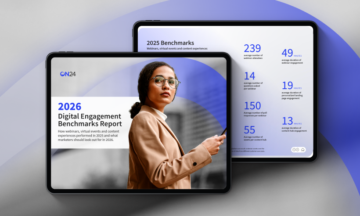
The 2026 Digital Engagement Benchmarks Report is here, revealing everything there is to know about webinar performance over the past year. We’ve analyzed extensive data from our platform to produce up-to-date webinar statistics and uncover fascinating insights.
This blog breaks down key takeaways from the report. We’ll explore how webinars, virtual events, and content experiences performed in 2025 and what digital marketers need to know when implementing their 2026 webinar strategies.
2026 Webinar Engagement

Webinars continue to fuel interest and engagement
According to our report, webinars continue to deliver engaging experiences for audiences and provide actionable insights for brands. In fact, the average number of attendees rose to 239 in 2025 — an 11% YOY increase. That rise in the average number of attendees is buttressed by two other positive trends: first, the average webinar conversion rate of registrations to attendees hit 60%; second, the average duration of webinar engagement remained steady at 49 minutes. This means high-quality and highly relevant audiences are attending webinars at a higher rate and are staying engaged with a brand for the better part of an hour.
Average number of webinar attendees per quarter
Webinar attendance increased across every quarter of 2025 compared to the same periods in 2024. Q4 saw the largest YOY change, with an average of 254 attendees per webinar, up from 219 the previous year.

As demand for webinars continues to rise, marketers have an opportunity to capture and nurture high-intent audiences with engaging, educational content. By delivering targeted experiences and leveraging interactive features, marketers can not only attract more attendees but also drive conversions and long-term retention.
Most popular webinar viewing formats
Despite live webinars being the most popular format in 2025, with 67% of attendees joining live, on-demand formats also saw significant engagement. Forty-three percent of attendees chose to watch on-demand webinars, demonstrating the value of the “anywhere, anytime” webinar experience.
The flexibility of on-demand webinars for audiences with busy schedules or time zone restraints continues to contribute to the format’s growing popularity. There has been a slow but steady increase in the proportion of attendees watching on-demand webinars, with a 1% annual rise from 2022 to 2025.
Making recordings available on-demand is one of the lowest-cost, highest-reward ways to maximize the value of webinar content.
Webinars As a Source of Information for Purchase Decisions

Webinars and on-demand content experiences play a key role in the buyer’s journey. Online resources like these don’t just educate and raise awareness among audiences — they’re also vital for nurturing high-intent prospects into leads.
2025 saw buyers increasingly turning to webinars as a source of information for purchase decisions. Demo bookings rose by 73%, while engagement with all calls-to-action (CTAs) per attendee increased by 49%.
Marketers also gained real-time insights into attendee purchase intent, with in-webinar engagement metrics surging over the past year. Attendees were more deeply engaged with the material, as demonstrated by a significant 18% increase in webinar channel engagement reactions per attendee.
Far from being mere learning experiences, though, webinars proved their effectiveness as powerful conversion tools that drive immediate action. Some of the stand-out stats from our webinar benchmarks report include a 4X increase in meeting bookings during webinars and a 51% increase in live chat with sales teams.
Real-time conversations can lead to quicker, more informed decision-making. The less friction buyers experience in their decision-making process, the more likely they are to continue on their path. This is why focusing on facilitating conversations and implementing standard CTAs can increase the likelihood of closing a deal.
When it comes to on-demand content experiences, there’s still plenty marketers can do to nurture prospects without real-time interaction. Serving personalized content that’s relevant to their audience’s needs will help businesses capitalize on the increased appetite for on-demand content of all formats.
In 2025, content hubs served as a strong source of buying signals for marketers to incorporate into their strategies. The average number of contact us requests per hub rose by 9%, while demo requests increased by 73%.
Overall, these stats highlight that marketers who don’t offer on-demand options and don’t optimize conversions will see reduced results from their webinars and content experiences.
Audience Appetite for Rich Engagement Options Grows

The most successful webinars are those that offer rich experiences where attendees feel truly immersed. Interactive tools and advanced follow-up features are what set the format apart from traditional online meetings, and using them effectively will lead to deeper audience engagement.
With each webinar producing over 300 individual interactions, they’re also a great way to generate valuable first-party data insights.
Webinar engagement by numbers
Average engagement across all webinars increased slightly in 2025. As a well-established format, webinars’ 18% rise indicates audiences’ continued preference for the interactivity they offer. Among the engagement options available to audiences, poll responses generated the most interaction, averaging 150 per webinar. Other engagement trends (average per webinar) include:
-
- 101 resource downloads
- 69 certifications
- 52 reactions
- 19 survey responses
- 1.8 interactions per attendee
On-demand webinars saw a higher increase in overall engagement than live formats. The engagement rate increased by 7% YOY, indicating engagement is rising faster than the shift towards on-demand viewing.
This highlights the importance of treating on-demand webinars as rich opportunities for interaction, just like live webinars. Incorporating engagement features such as polls, surveys, and content suggestions will provide a continual source of first-party data that enhances audience insights.
Personalization Correlates with Significantly Improved Performance

Personalization is a core strategy in modern digital marketing that seeks to connect brands with personas more directly and effectively. This push towards personalization includes webinars, with data showing that performance from personalized digital experiences can rise by up to 4X YOY.
Improvements in performance can be seen throughout the funnel when personalization is used effectively. The average number of CTA clicks from personalized landing pages increased by 49% in 2025, while the same period saw a 25% increase in resource downloads and a 95% increase in on-demand webinar views per hub.
Businesses using personalization see stronger performance
Businesses that used personalization saw an uplift across a range of metrics compared with those that hadn’t incorporated it into their nurture strategies. For example, the average number of on-demand attendees jumped from 97 for businesses not using personalization to 125 for those that do — a 25% increase. A similar trend can be found in conversion rates across personalized CTAs, which resulted in an 118% jump in clicks.
AI and Automation Drive Significantly Better Results

The State of AI in B2B Marketing report found that B2B marketers using AI were 7X more likely to hit their goals than miss them. Along with the revelation that 87% of B2B marketers are already using or testing AI, it’s clear that businesses not using these technologies are at risk of falling behind the competition.
AI is seeing increased adoption for promoting and repurposing webinars
Our recent The State of AI in B2B Marketing report found that 63% of marketers who had implemented AI were using it for promotional content – the most popular use case.
The 2026 Webinar Benchmarks Report has uncovered similar findings. In 2025, there was a 37% increase in use of our AI-powered Analytics and Content Engine feature to create derivative content from a single webinar.
These AI and webinar statistics demonstrate that AI is integral to the webinar production process. Although we’ve highlighted the role it plays both before and after the event, it’s also important to remember how it can enhance the attendee experience during the event through technologies like AI-powered chatbots.
Engagement with AI-generated content
One of the most unexpected revelations from the data we analyzed is that engagement with AI-generated content is rising faster than its creation. In 2025, the number of articles produced with the help of AI rose by 37%, resulting in a 2.5x and 2.4x increase in video clips and written content produced.
What we can learn from these stats is that, despite some concerns, AI-generated content isn’t just about scaling up production. It can also be of a high enough quality to deliver value to audiences and sustain their attention.